Posts

The Use Of Zinc In Construction And Its Benefits

Zinc is a great, lightweight, bright metal used extensively in roofing and vertical cladding. It is likely used where  zinc roof sheets   have predominated. It is becoming more popular for stable municipal and business structures and houses as its environmental advantages become more apparent. A Brief History Of Zinc Despite its ancient knowledge, zinc was not mass-produced until the 12th century. Zinc is a highly sought-after metal. It is also a corrosion-resistant coating for galvanizing steel and iron and has several uses in health, medicine, agriculture, etc. Mining and Commercial Use Zinc is now widely used for roofing and cladding on buildings and other structures. Zinc alloys are also suitable for die-casting, a famous industrial method. Zinc alloy die-casting has many ornamental and practical uses. Benefits of Zinc Durable and Resistant To Corrosion Rust development due to air moisture is a serious issue when working with iron or steel. Zinc eliminates this problem by ...

How Can Natural Metal Facades Help You To Achieve Durable Architectural Solutions / Innovation?

The metal cladding has been hugging the architectural twists and bends for years. Designers have used  metal cladding  from Louis Sullivan's tin cans to the titanium swoops because of its formal flexibility and polish. One of the reasons it is so popular is its wide range of uses. Innovative and well-structured ambiences are always met with great office-level responses. A building's skin is its front, while its cladding is its internal structure.  Facade companies in India  are among the most popular choices for modern architecture. Here is how  metal cladding  and facades help bring forth this innovation: Metal Cladding Systems Non-structural rain-screen cladding systems often use metal since they offer both weather protection and a visually stunning finish on the outside. Each technique has its advantages in terms of construction difficulty and aesthetic finish because metal panels can be folded or rolled up and fastened to a structure. The following are ...

The Style Evolution of Jaalis – VMZinc

Image
  Jaalis are perforated lattices or screens that have decorative patterns. Jaalis designs are common in Hindu and Islamic architectures. The original purpose of jaalis was to filter the light and allow the essential natural light into the building. Initially, jaalis were curved on sheets of stones and concrete, but due to modern technology, the purpose and materials of jaalis have changed. Nowadays, the jaalis designs have taken a diverse function and market. There are perforated metal screens and vmzinc screens. They help to decorate and ventilate the room. Jaalis are also being used in façade cladding and room partitioning. Jaalis enhance the beauty of the house due to their ornamental patterns. Origin and evolution of jaalis Jaalis originated from Islamic culture, which filters the light and allows natural light into the room. The culture has a special regard for light. They also have a root origin from the Arabian desert, which was necessary to distort the hot sunli...

VmZinc: Benefits of zinc make it popular cladding

Image
  Zinc is a metal that has been widely used which is lightweight and is mainly used in roof construction and cladding. This material has been extensively used in most architectural designs since the old times. Zinc is becoming popular for public and private buildings that need to last long and have more advantages as you are highly encouraged to use this. Cladding refers to an exterior covering applied on a high building to increase its heat efficiency to adjust the aesthetic climate to the resistance of weather affection. Now   zinc wall cladding   is a method that is highly recommended in construction as it has more of its benefits. If you are looking for façade designs, you can consult with  façade companies in India  for quality work. Zinc has unique features that make architects consider it cladding rather than other materials. The following are benefits of zinc: Benefits Of zinc Durability The zinc roofs can last up to 150 years because of the anti-corrosi...

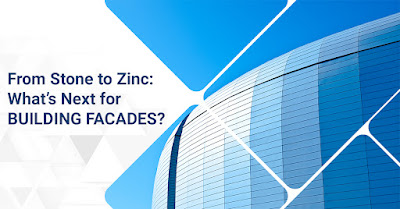
From Stone to Zinc: What’s Next for Building Facades?

Image
  Façade design requires quality material because it is the rear part of the house. For the previous decades, cladding was made using stones but currently the design is being replaced by innovative and interesting materials like zinc and aluminium. These materials are known for low maintenance and durability. The metal roof sheets designs are now being outdated by the mineral fibre design. Most metal roofing sheets manufacturer s are incorporating the production of mineral fibre panels and sheets in their value chain to catch up with the trend. Evolution of façade materials The history of facade design can be traced back to 807 B.C when the first façade cladding was done using wood. It stayed in the market for a long time before lime, clay, and stone were discovered. During 1800AC glass cladding took over the industry. The technology has inspired the discovery of new materials for cladding such as ceramic, metal, and aluminium. Currently, people have discovered minerals like zinc ...

The New Era of Parametric Facade Design

Image
The zinc façade is one of the most creative, innovative, and dynamic aspects of building design. The building's outermost surface has several functions and goals, from establishing a visual presence to protecting against external factors.  Today, the  parametric facade , internal skin, or cladding's purpose is just as challenging to achieve as the building itself since it must strike an appropriate balance between all variables. Now let's dive deeper to know what the New Era of parametric facade design involves. It integrates all the aspects of the cladding system Is this the complexity of the challenge of a lack of design resources available? Perhaps it's a combination of the two. With the help of an expert, you can solve the two issues. Parametric facade design experts will assume the responsibilities of building and facades, which an association of engineers and suppliers will handle.  A mutually dependent invention can only emerge when two-way collaboration ...

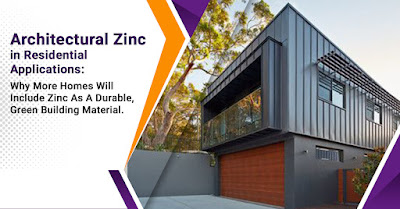
Architectural Zinc in Residential Applications: Why More Homes Will Include Zinc As A Durable, Green Building Material

Image
Zinc has increased in popularity in architectural designs due to its durability. It is considered a green building material because it doesn't cause environmental pollution. Zinc architectural designs form a protective coating known as patina or zinc hydroxy-carbonate. Water and chemicals cannot penetrate once the layer is established. If scratched, the layer will reconstruct over time to its original shape. That is to say; zinc has a healing property all on its own. Because of this,  zinc wall cladding   and roofs have a long life which can go up to 100 years. Zinc is also a low-maintenance metal, requiring relatively little energy to manufacture and no upkeep once it reaches its final destination. Zinc roofing and wall cladding panels are never thrown away because of wear and tear, hence the name green building material. Architectural benefits of zinc Zinc can be used in various parts of architecture such as roof, wall cladding, façade design, amongst others. ...